-
Phone
- (800) 774-3959
- Closed, but you can leave a Voicemail
-
Hours (EST)
- Mon to Fri, 8 am to 7 pm
- Sat to Sun, 12 pm to 4 pm
-
Live Chat
- Offline, but you can leave a Message
-
Hours (EST)
- Mon to Fri, 8 am to 7 pm
-
Email
-
Hours (EST)
- Mon to Fri, 8 am to 7 pm
- Sat to Sun, 12 pm to 4 pm
-
Response Times
- sales@goreadyinsurance.com (within 1 to 4 hrs)
- claims@goreadyinsurance.com (within 24 hours)
- service@goreadyinsurance.com (within 24 hours)
-
Hours (EST)


France Travel Insurance Guide and Tips
Does France Have Travel Restrictions?
The good news is that traveling to France and other European countries is generally safe. France has no broad COVID-era travel ban; however, standard Schengen entry rules apply.
Now that you know the France travel restrictions from U.S. origin points, it is important to know the France travel requirements for passengers returning to the United States. According to a French travel advisory, all non-U.S. citizens must show proof of COVID-19 vaccination upon their arrival at an American airport. If you meet up with friends from another country during your France travel, vaccinated individuals are the only ones permitted to enter the United States when your trip ends.
Do U.S. Citizens Need Travel Insurance to Visit France?
Americans traveling to France for tourism or business do not need a visa for stays of up to 90 days within any 180-day period, and travel insurance is not a legal requirement for that visa-free entry. Travelers who do need a Schengen visa, including those staying longer or traveling for other purposes, must show proof of travel medical insurance that meets the Schengen Visa Code’s minimum standard: at least €30,000, or roughly $32,000, in emergency medical and repatriation coverage, valid across the entire Schengen Area for the full length of the trip. Even when a visa isn’t required, French border officers can ask to see proof of coverage, and a serious illness or accident without insurance can mean paying French hospital bills directly out of pocket.
The ETIAS Travel Authorization
Starting in late 2026, U.S. citizens will need to apply for the European Travel Information and Authorization System (ETIAS), before flying to France and the rest of the Schengen Area. ETIAS is not a visa; it is an online screening application that costs €20, takes only a few minutes to complete, and stays valid for three years, or until the traveler’s passport expires, whichever comes first. The European Commission has confirmed a fourth-quarter 2026 launch window, though the exact start date has shifted before, so travelers should confirm the current timeline closer to their trip.
Common Travel Disruptions in France to Plan For
France has seen recurring air traffic control and airport worker strikes throughout 2026, with disruptions at Paris Charles de Gaulle, Paris Orly, and other major airports affecting thousands of flights over the course of the year. Strikes can happen with little notice and tend to cause delays and cancellations that ripple across the airline network, not only the airline involved in the dispute. Trip cancellation and interruption coverage, along with travel delay benefits, can help offset the cost of rebooking flights, an unplanned hotel night, or nonrefundable reservations lost to a strike or weather event.
Regions of France to Visit
Île-de-France, Aquitaine, Provence, and Burgundy are four of the most popular regions of France. Each area has unique geographical features, weather patterns, and cultural traditions.
Île-de-France
Île-de-France is home to Paris, the country’s capital city. This region is packed with historical sites and museums and is ideal for travelers interested in learning about the history of France and other European countries. It is also filled with architectural wonders.
Aquitaine
Located in the southwestern part of the country, Aquitaine, France, is known for its vineyards and miles of Atlantic coastline. This region is ideal for travelers who love to relax with a glass of wine or spend the day sunning themselves on sandy beaches.
Provence
If you need a relaxing getaway, Provence is the ideal destination, as it is filled with orchards and vineyards. Depending on where you stay, you may even get to explore limestone caves or spend time shopping at an outdoor market. However, one of the most exciting aspects of Provence, France, travel is the opportunity to stroll through one of the region’s famed lavender fields.
Burgundy
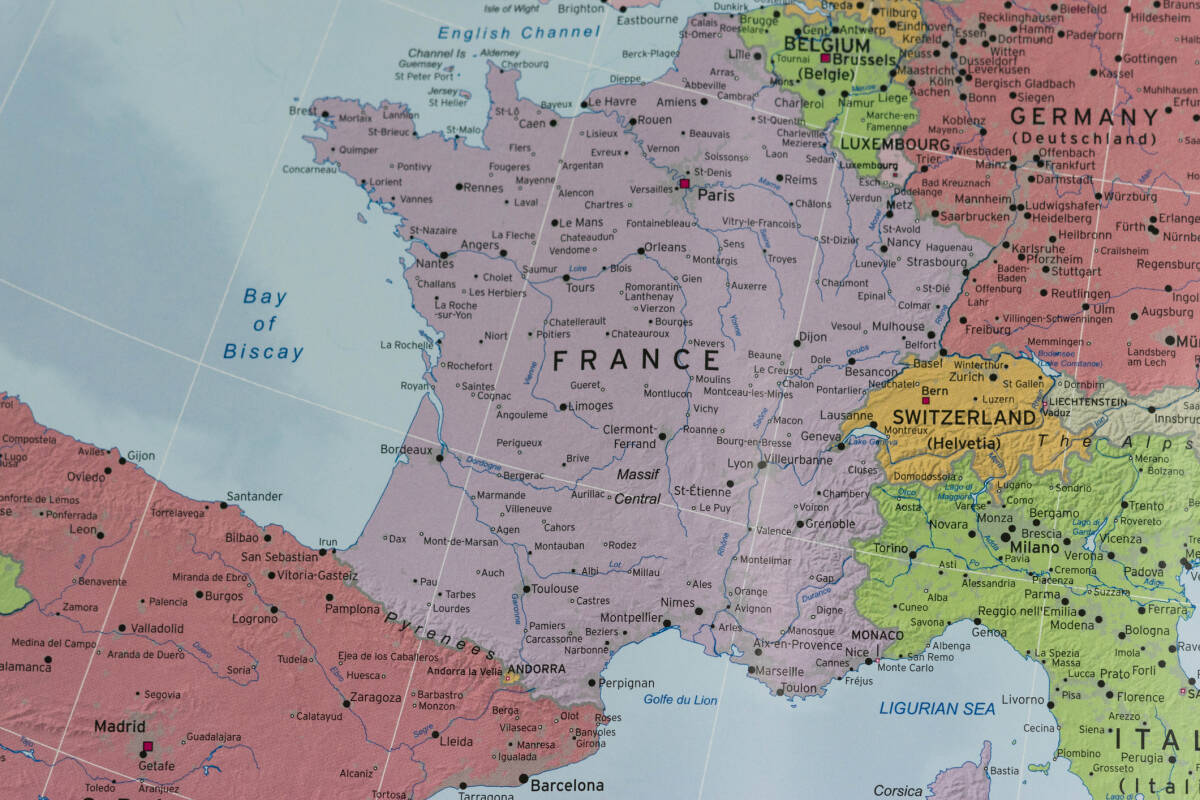
Burgundy, France, is less crowded than Île-de-France, but it still offers plenty. Wine enthusiasts enjoy visiting Burgundy’s vineyards and trying new varieties, while architecture buffs come to the area to view breathtaking Gothic structures. This region is also home to Dijon, France, previously the capital of the duchy of Burgundy. Consult the map of France for more details about French geography.
Cities in France to Visit
Now that you know about the most popular regions of France, you can start planning which cities to visit. Paris, Bordeaux, Avignon, and Dijon are among the most-visited destinations in the country, so they have something to offer everyone.
Paris
If you can only visit one city on your trip, make it Paris, France. The capital of France is home to the Eiffel Tower, Louvre, and some of the best French food you’ll ever eat. Paris has more than 100 Michelin-starred restaurants, including St. James Paris, La Grande Cascade, and Le Cinq. The City of Light also has many historic sites, such as Notre Dame Cathedral.
Bordeaux
Bordeaux, France, is home to some of the most famous wineries in the country. Some vineyards have hotels on site, giving travelers a comfortable place to stay while they try the region’s most notable red wine blends. Bordeaux has many cultural and historical sites, such as Monument aux Girondins and Porte Dijeaux.
Avignon
Avignon, France, didn’t become part of the country until the end of the 18th century. Before then, it was governed by Catholic popes, making it the ideal destination for anyone wanting to learn more about religious history. Palais des Papes is a popular attraction for its religious significance and Gothic design.
Dijon
As the former capital of the duchy, Dijon is home to the Palais des Ducs, which contains the Musée des Beaux-Arts. Visitors flock to this museum to view Renaissance paintings, medieval weapons, and other historical objects. The Palace of the Dukes is also a popular destination, as it is connected to City Hill and contains the caskets of previous dukes.
French Beaches
If your itinerary includes Corsica, relax on Palombaggia Beach after conquering one of the island’s many hiking trails. Known as one of the most beautiful French beaches, Palombaggia has white sand and offers stunning views of the Mediterranean’s crystal-clear waters.
While in the South of France, travel to Antibes to see where Claude Monet completed some of his most famous paintings. Antibes, France, sits on the Côte d’Azur and has several parks and museums to keep you entertained as you enjoy your South of France travel.
Paloma Beach, France, is one of the best French beaches. Situated on the French Riviera at Saint-Jean-Cap-Ferrat, this beach has sheltered bays that make it ideal for snorkeling. Conclude your trip to Southern France with a stop at Les Calanques de Cassis in Provence.
France Travel Tips
Before you travel, you should know that the French timezone is Central European Summer Time (GMT +2). Set your watch accordingly so you always know the accurate time during your trip. The main currency of France is the euro, but you may also see French francs or Swiss francs. The weather in France varies depending on which region you visit. In most cases, France has mild summers and cool winters, which also applies to Paris. However, if you visit the Mediterranean, expect hot summers and mild winters.
What Travel Insurance for France Should Cover
A comprehensive plan for France should address the specific risks of traveling in Europe. Coverage worth confirming before departure includes emergency medical treatment and hospitalization in France, medical evacuation to a better-equipped facility or home, and trip cancellation or interruption tied to illness or flight disruption. Reimbursement for delayed or lost baggage rounds out the core protections most travelers look for. For Schengen visa applicants, the policy should also clearly state that it meets the €30,000 minimum and covers the entire Schengen Area, since a plan naming only France may not satisfy an embassy reviewing the application.
Why You Should Consider Aegis General Travel Insurance
Travel insurance is not required, but Aegis travel insurance gives you extra peace of mind. If you must cancel your trip due to COVID-19 or another serious illness, or if you injure yourself while overseas, Aegis provides the protection you need to avoid significant losses.
Choosing the Right Aegis Plan for Your France Trip
Aegis’s Go Ready Elite Plan offers higher medical and evacuation limits and meets Schengen visa insurance requirements, making it a fit for travelers applying for a Schengen visa or anyone who wants broader coverage for a France trip. Travelers focused mainly on protecting nonrefundable trip costs can add Cancel For Any Reason coverage as an optional upgrade for extra flexibility. For help confirming which plan meets your specific Schengen visa insurance requirements, see Aegis’s Schengen visa insurance guide.
Stress Less Benefits Included with Every Plan
Our trip insurance benefits help travelers avoid paying out of pocket and dealing with claim reimbursements. By reaching out to Aegis right away during a covered event, such as a flight delay, illness, or injury, our team can step in to manage the situation and cover the costs upfront. Whether it’s rescheduling flights and accommodations, organizing medical treatment, or facilitating emergency evacuation or repatriation, we handle the logistics so travelers can focus on their journey.
Frequently Asked Questions
Do I need travel insurance to visit France as a U.S. citizen?
Not for visa-free tourism or business stays of up to 90 days. Travel insurance becomes a requirement if you need a Schengen visa for a longer or different type of stay, and it is strongly recommended even for visa-free trips, since French healthcare providers can require payment before treatment.
What is the minimum travel insurance coverage required for a Schengen visa?
Schengen visa applicants need a policy with at least €30,000 in emergency medical and repatriation coverage that is valid throughout the Schengen Area for the entire duration of the trip, as set by the EU Visa Code.
Will I need ETIAS to travel to France?
Yes, once ETIAS launches, which is expected in the fourth quarter of 2026. The authorization costs €20, is completed online before departure, and stays valid for three years or until your passport expires.
How long does my passport need to be valid to enter France?
Passports need to be valid at least three months beyond your planned departure from the Schengen Area, according to the U.S. Embassy in France. Many travelers keep six months of validity as a buffer.
Does France still require proof of COVID-19 vaccination or a negative test to enter?
No. France removed its COVID-19 entry requirements for tourists in 2022, and no vaccination or test proof is currently needed. Health screening rules could change if a new public health concern emerges, so check the U.S. Embassy in France’s website close to your travel date.
Does travel insurance cover flight delays and strikes in France?
Comprehensive plans that include trip delay, trip cancellation, and trip interruption benefits can reimburse reasonable expenses and recover nonrefundable costs when a strike, air traffic control action, or other disruption affects your trip. Coverage details and waiting periods vary by plan.
Which Aegis plan is best for a trip to France?
The Go Ready Elite Plan meets Schengen visa insurance requirements and offers higher medical and evacuation limits, making it a strong option for most France trips. Travelers focused mainly on protecting trip costs can add Cancel For Any Reason coverage for extra flexibility.


Aegis General Insurance Agency Inc.
Travel Insurance Division
CA License No. 0I66850
National Producer No. 957388